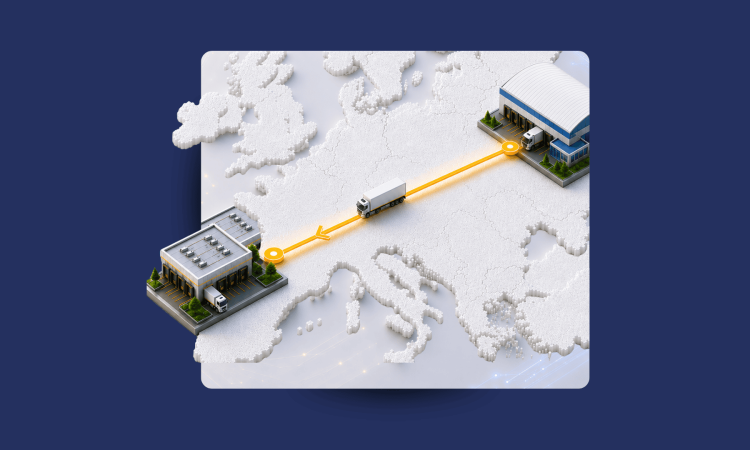
Digitalization in logistics enables companies to automate order processing, documentation, billing, and communication — reducing errors, accelerating workflows, and improving customer satisfaction.
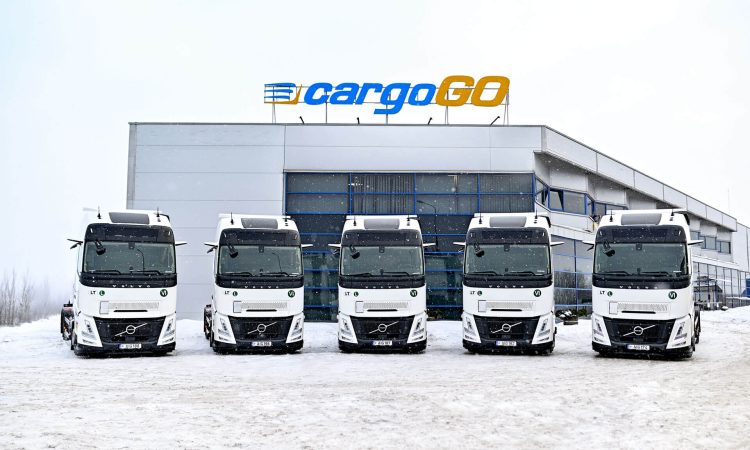
At cargoGO Logistics, one of the most forward-thinking logistics providers in the Baltics, digitalization is not a buzzword — it’s a core business strategy.
Automated processes have reduced manual workloads by up to 90%, optimized driver management, enabled real-time responsiveness, and elevated service quality across the board.
Digitalization as the Core of cargoGO’s Strategy
At cargoGO, digitalization isn’t just a tool — it’s the backbone of our entire logistics operation.
A centralized IT infrastructure connects order management, document processing, billing, and customer service into one fully integrated system.
Every process is either already automated or actively transitioning toward automation, enabling real-time data flows without manual input. This ensures both operational speed and data accuracy at every level.
Our digital solutions maintain consistent performance in order processing, document handling, and customer support — even as workloads increase or market conditions shift.
That’s why digitalization at cargoGO isn’t just a technical upgrade — it’s a key part of our long-term competitive advantage.
End-to-End Automation Across the Logistics Chain
Order intake, allocation, and tracking at cargoGO are fully automated, requiring no manual input.
The same approach applies to document management — documents are processed using OCR technology and seamlessly integrated into internal systems.
Invoices are generated based on order data and sent to clients automatically on the same day.
Portions of client communication are managed by AI algorithms that prioritize inquiries based on content and customer history.
All these processes run on a single platform, minimizing the risk of errors and eliminating data duplication.
As a result, operations remain stable and efficient even during periods of high shipment volumes or complex routing requirements.
What Digitalization Delivers in Practice
Through automation, we’ve reduced manual document handling by up to 90%.
Eliminating repetitive tasks allows employees to focus on decision-making and critical issue resolution.
Error rates are minimized because data flows directly into systems without manual entry.
Managers have access to accurate, real-time operational data — enabling faster, data-driven decisions instead of relying on delayed reports.
Driver management is based on actual productivity metrics rather than subjective judgment, making it easier to optimize routes and shift planning.
Clients benefit from faster responses, transparent cargo status updates, and fewer repetitive inquiries.
Why This Matters for the Logistics Industry
In logistics, speed of decision-making and data accuracy directly impact service quality.
Companies that fail to digitalize their operations face rising costs, delays, and unreliable information.
Digitalization enables real-time risk management, reduces human error, and allows for rapid adaptation to changing conditions.
In a competitive market, the winners aren’t just those who can move freight — they’re the ones who know how to optimize the entire supply chain.
In this landscape, cargoGO stands out by automating not just isolated processes, but the entire logistics ecosystem.
What Clients Gain by Choosing a Digital Logistics Partner Like cargoGO
Clients who choose cargoGO get more than just transportation — they gain a fully digital logistics solution.
The entire order flow — from cargo registration to invoicing — is tracked and updated in real time, while shipment location, condition, and delivery status are accessible without additional requests.
Human error is virtually eliminated, reducing the risk of losses caused by inaccuracies or delays.
A digital logistics partner like cargoGO can respond faster to market changes, offer more flexible solutions, and consistently deliver a higher standard of service.